
🎯 Big picture
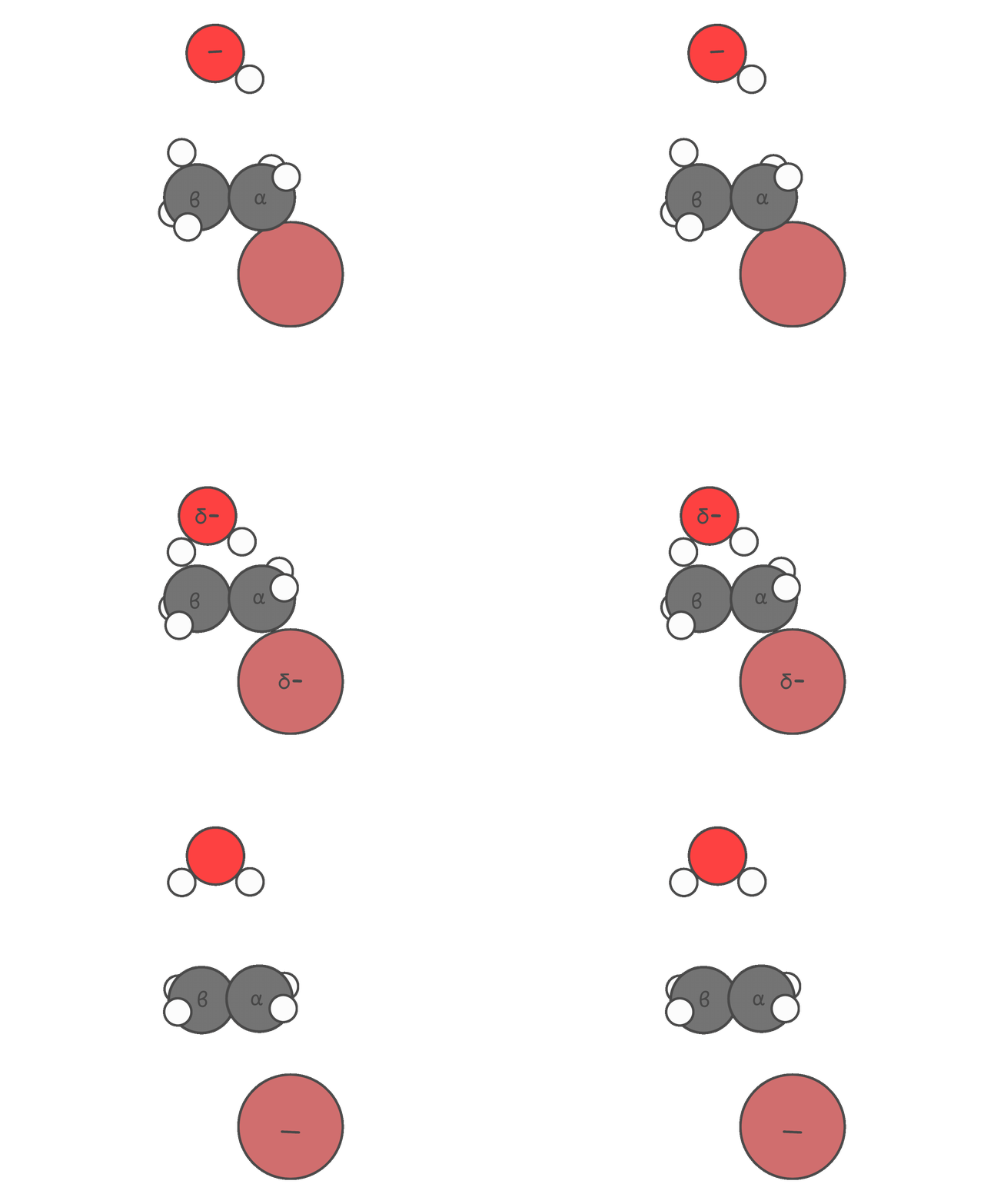
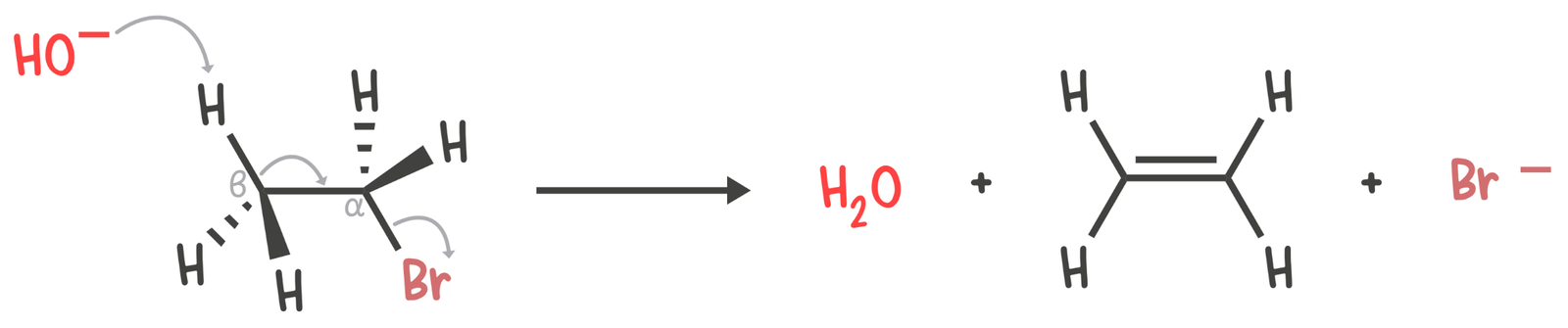
In a previous guide, we explored the key requirement that an E2 reaction proceeds through an anti-periplanar conformation. This means the leaving group and a β-hydrogen must lie in the same plane but point in opposite directions.
On a cyclohexane ring, this requirement is met when both the leaving group and the β-hydrogen occupy axial positions and are pointing in opposite directions.
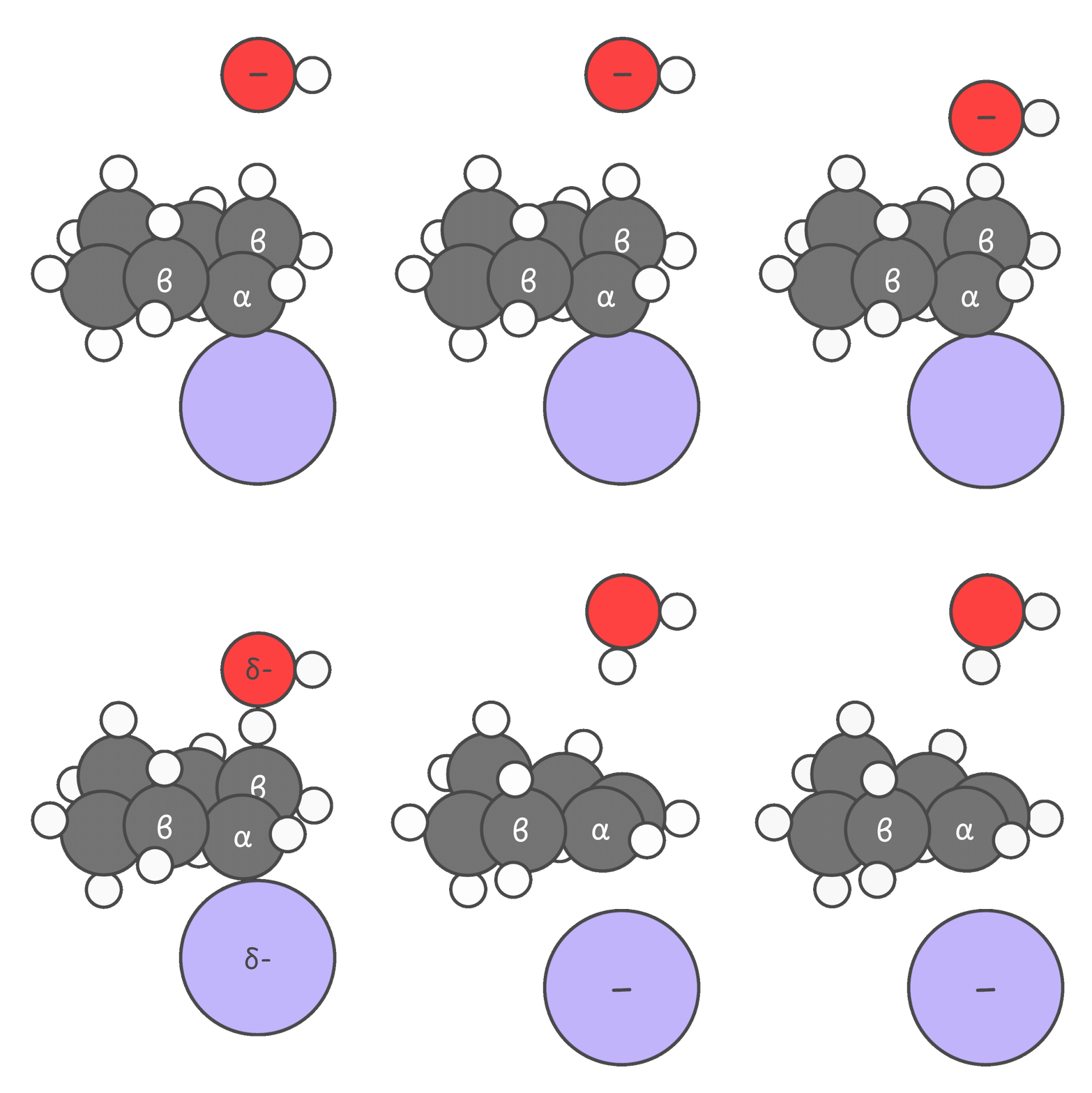
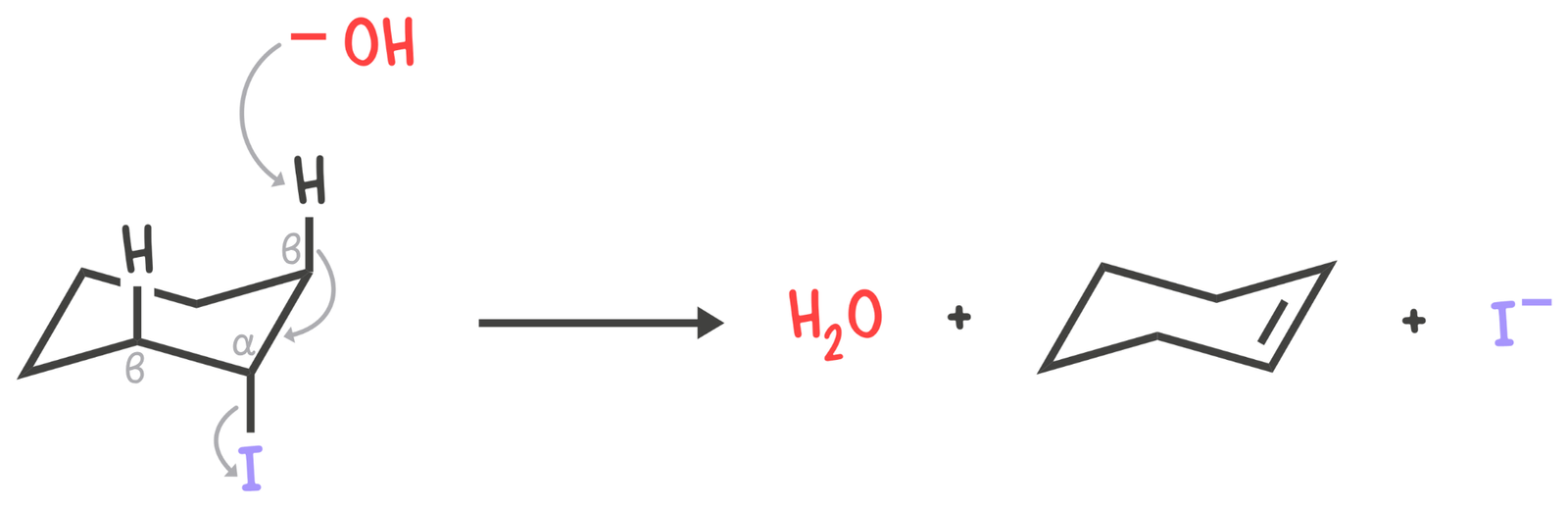
This specific orientation is called the trans-diaxial arrangement.
If either the leaving group or the β-hydrogen is in an equatorial position, they can’t achieve the necessary anti-periplanar geometry. In that case, E2 elimination cannot occur.
Let’s break that down step by step.
Step 1: Draw both chair conformations of the cyclohexane
Let’s begin by predicting the product of the given reaction.
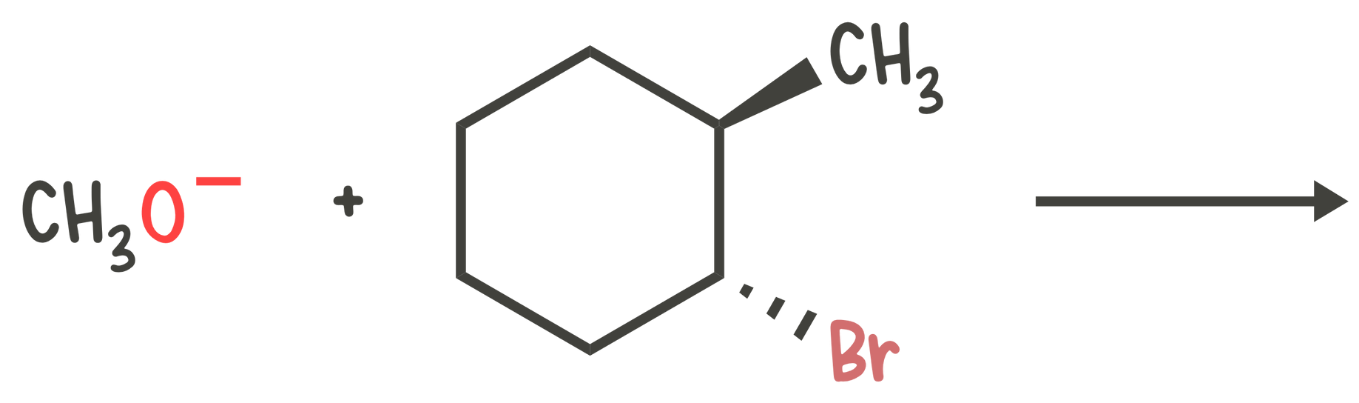
Start by drawing both possible chair conformations of your substituted cyclohexane.
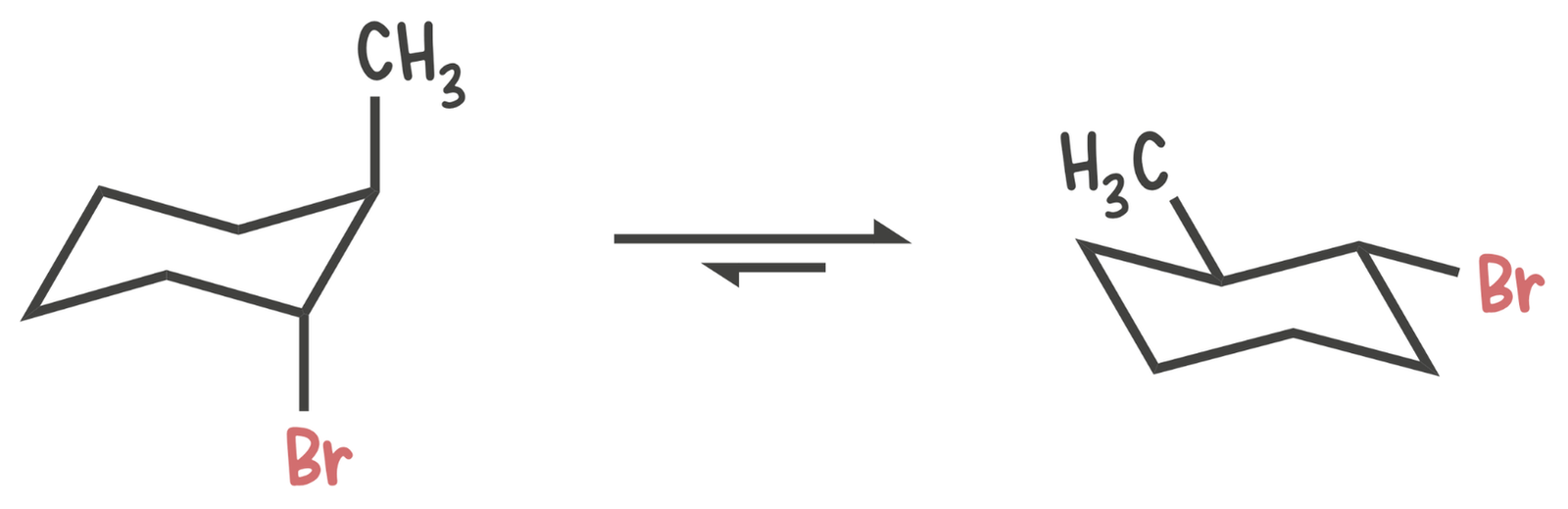
This gives you a clear picture of where each substituent lands, whether axial or equatorial, which is key to predicting whether E2 can proceed.
Step 2: Identify the chair conformation where the leaving group is axial
Next, focus on the chair conformation in which the leaving group is axial.
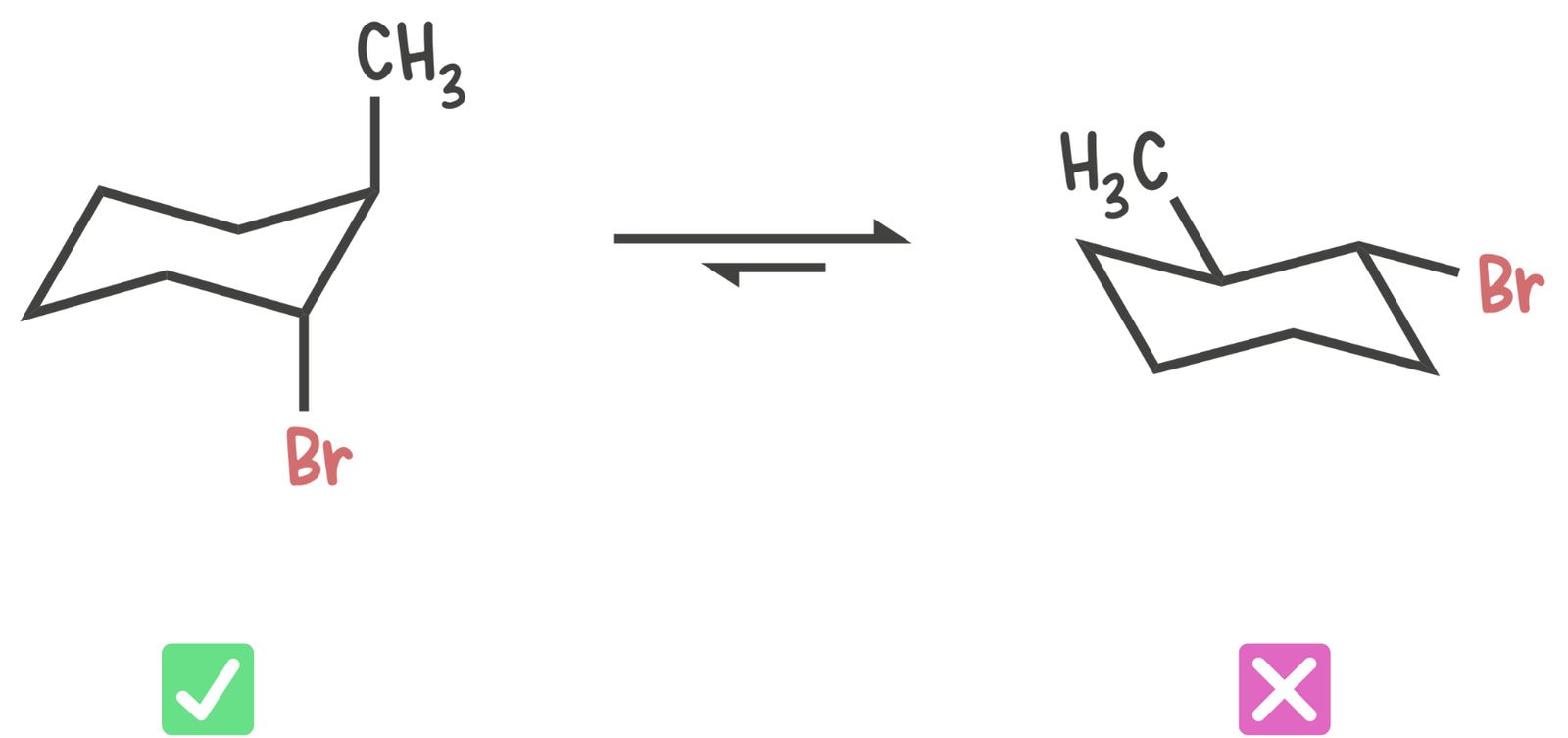
Why? Because only axial leaving groups can adopt the anti-periplanar geometry required for E2.
If the leaving group is equatorial, E2 cannot occur.
Step 3: Look for a β-hydrogen that is also axial and trans to the leaving group
Now check the adjacent β-carbons for hydrogens that are also axial and importantly, trans to the axial leaving group.
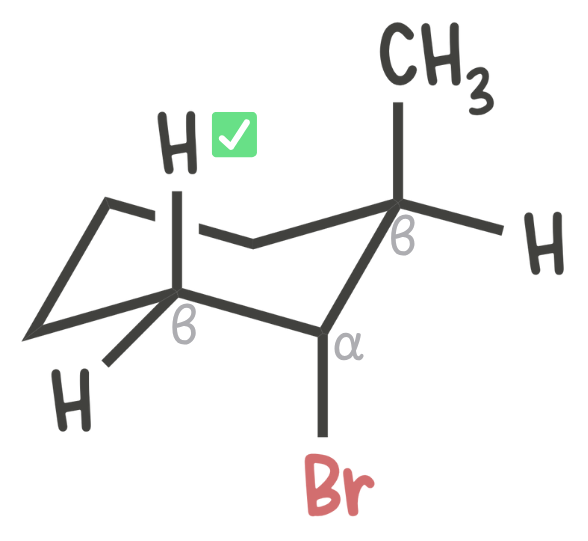
This geometric requirement is called the trans-diaxial arrangement.
Without it, E2 cannot proceed, no matter how strong your base is.
Step 4: Eliminate the correct β-hydrogen to form the double bond
Once the trans-diaxial conformation is confirmed, you’re ready for elimination.
The base will abstract the axial β-hydrogen that is trans to the leaving group. At the same time, the leaving group departs, and a double bond forms between the α- and β-carbons.
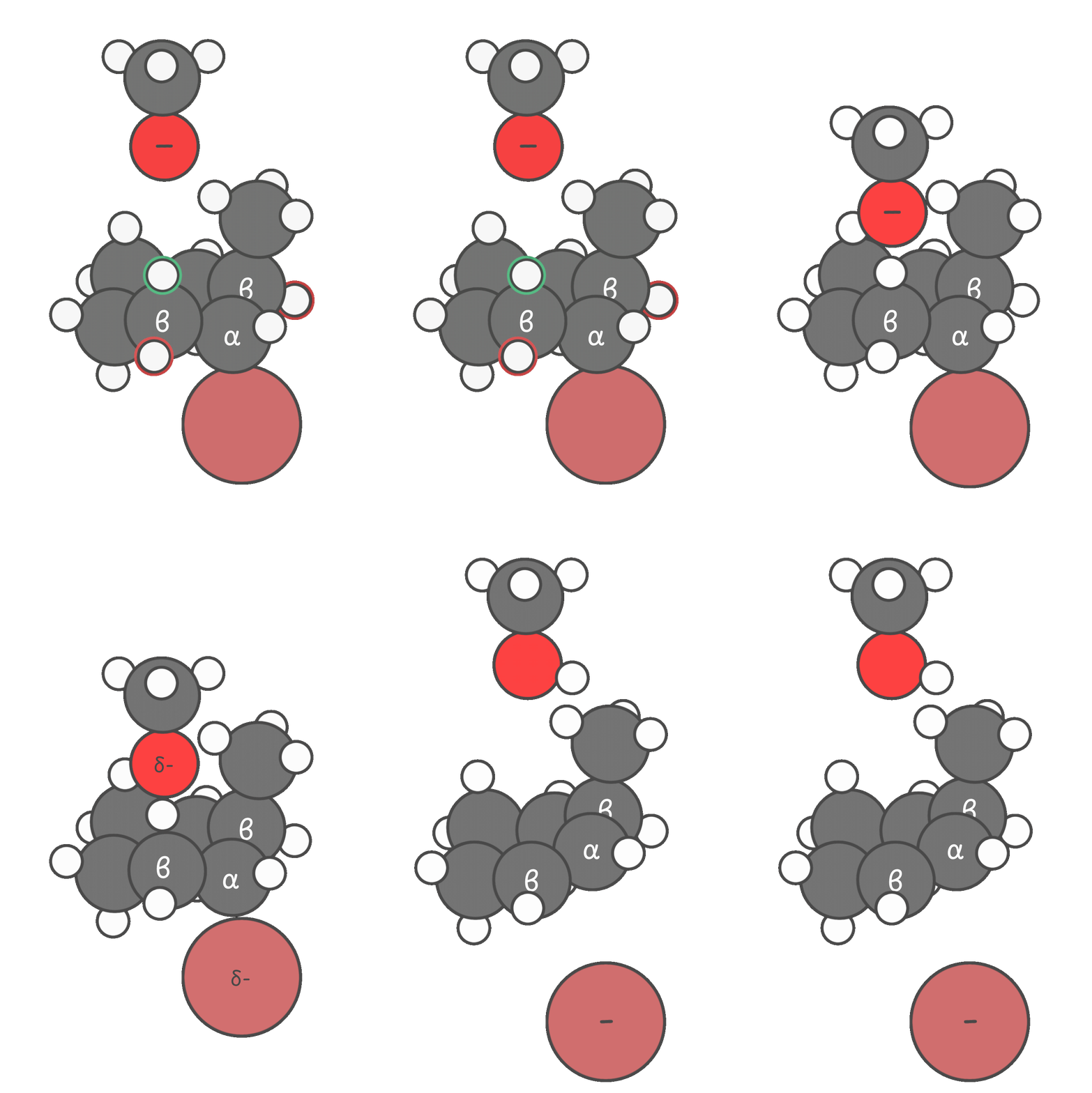
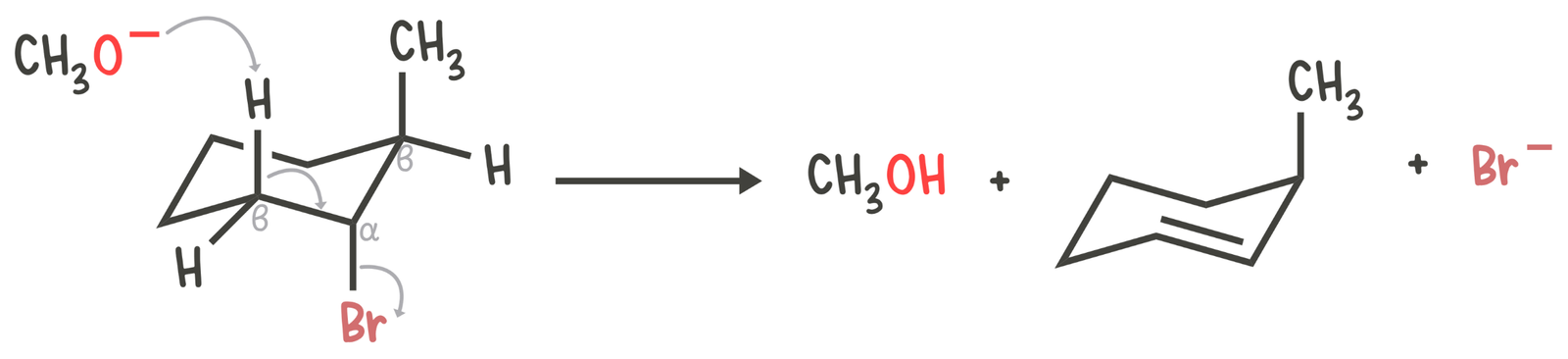
If there are no axial β-hydrogens trans to the leaving group, even if β-hydrogens exist in other orientations, E2 cannot happen.
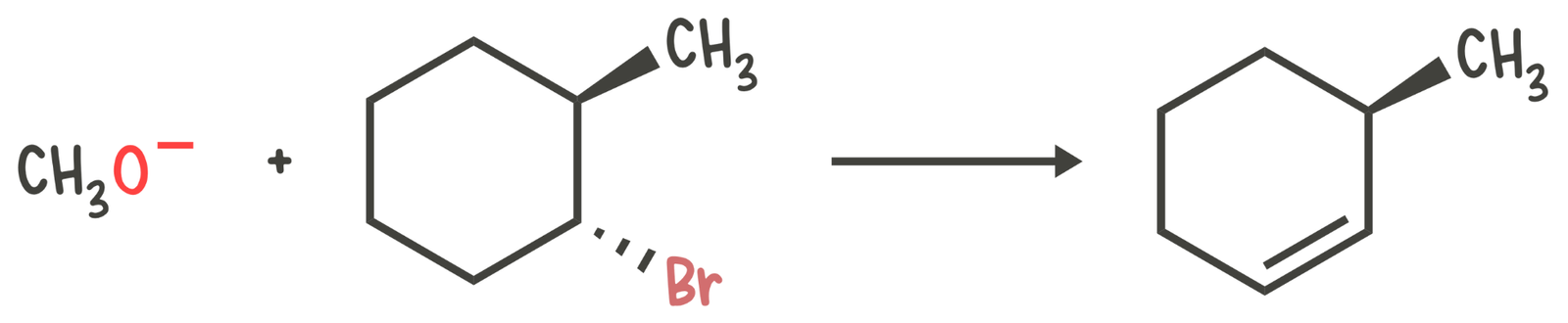
Quick recap
1️⃣ Draw both conformations of the cyclohexane
2️⃣ Find the conformation where the leaving group is axial
3️⃣ Locate β-hydrogen that is also axial and trans to the leaving group
4️⃣ Eliminate that β-hydrogen to form the double bond
By following these steps, you’ll be able to confidently determine whether E2 elimination can occur on a cyclohexane ring and accurately predict the major product. Keep practicing, and it will soon become second nature. 🚀